
Divorce does not have to begin with a courtroom battle. For many families, the most important question is not, "How do I win?" It is, "How do I reach a fair resolution while protecting my children, finances, privacy, and future?"
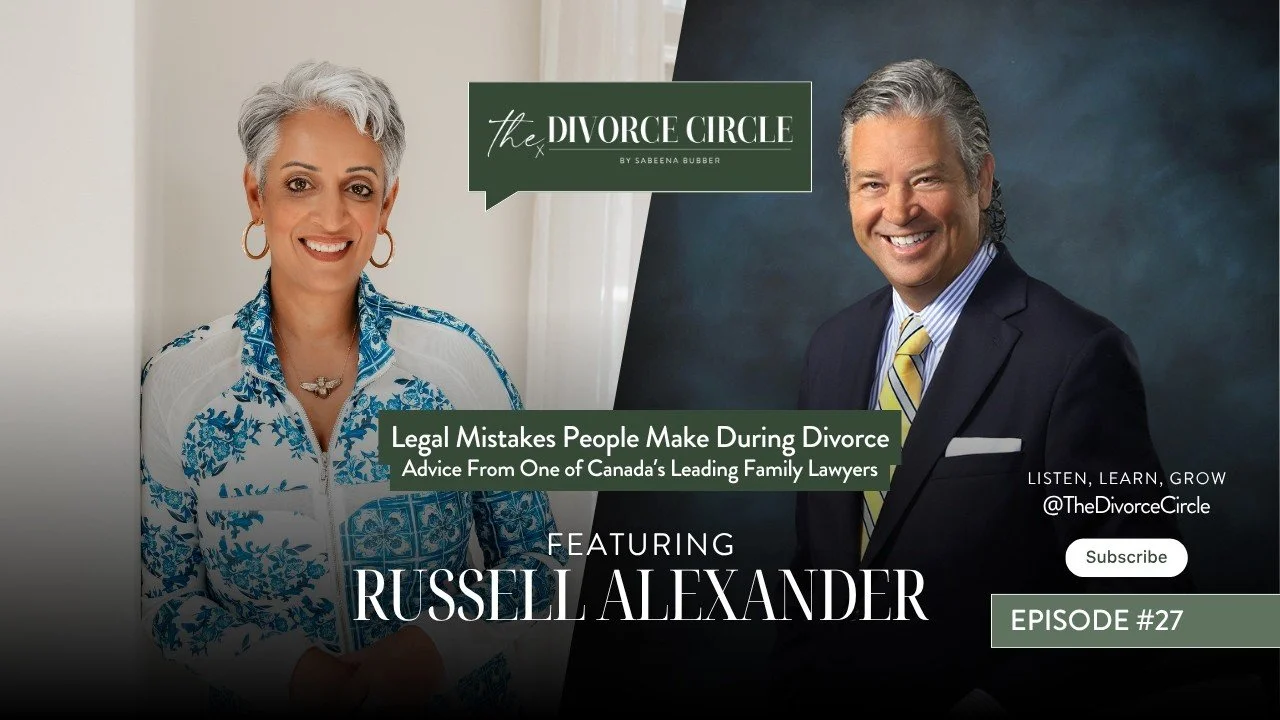
In this episode of The Divorce Circle, host Sabeena Bubber, Mortgage Broker for Xeva Mortgage speaks with Russell Alexander, founder of Russell Alexander Collaborative Family Lawyers. Russell has practised family law for more than 25 years, is a trained collaborative family lawyer, and is the host of Family Law Now.
Their conversation explores the changing face of family law, including collaborative divorce, the role of technology and AI, the complexity of family businesses, and the practical realities of navigating a high-conflict former partner. The central message is clear: the best outcome is often one that gives a family greater control over the process, rather than leaving every decision to the court.
“Do I need a judge to help me with this family?”
Russell Alexander's practical starting question for determining whether a collaborative path may be possible.
Watch the full episode: Collaborative Divorce, AI, and High-Conflict Family Law with Russell Alexander
Collaborative Divorce: A Different Way to Resolve Family Law Issues
Collaborative divorce is a structured, out-of-court process in which each person has a collaboratively trained lawyer and works toward a mutually acceptable agreement. It is designed to encourage open communication, full information sharing, and solutions that consider the most important needs of everyone involved. Financial specialists, child specialists, divorce coaches, and other professionals can be brought into the process where needed.
Russell describes a spectrum of family law approaches. At one end are highly adversarial strategies that focus on fighting at every stage. At the other are resolution-focused strategies that seek to reduce conflict and keep decision-making with the family wherever it is safe and appropriate. His question, "Do I need a judge?" helps distinguish situations that may be resolved collaboratively from situations that require court intervention because of abuse, serious safety concerns, or a refusal to provide financial disclosure.
Collaborative divorce
Problem-solving, transparency, and negotiated solutions
Both people can participate in good faith and exchange the information needed to reach an agreement.
Mediation
Facilitated discussion with a neutral mediator
The parties need help communicating but are willing to work toward resolution.
Court process
A judge decides disputed issues under family law
Safety, abuse, hidden assets, urgent enforcement concerns, or an inability to secure meaningful disclosure may require court involvement.
There is no single approach that is right for every family. The important first step is to understand the options, seek independent legal advice, and choose a process that fits the facts of your situation.
Define Your Own Goals Before the Process Defines Them for You
A separation can consume so much emotional energy that people become focused entirely on their spouse, their children, or the next immediate problem. In the episode, Russell notes that clients are often challenged when asked what they personally want from the next chapter of their life.
This is not a selfish question. It is a strategic one. Your goals will affect the decisions you make about your home, business, parenting plan, support arrangements, retirement, and mortgage. Before signing an agreement or committing to a property decision, take time to consider the outcome you are working toward.
Housing: Do I want to keep the family home, refinance, buy a new property, or rent while I regain clarity?
Cash flow: What income, support, debt payments, and homeownership costs will I have after the separation?
Children: What arrangements support consistency, safety, and the children's day-to-day needs?
Career and retirement: What changes are needed to create sustainable independence in the years ahead?
Emotional capacity: Do I need coaching, counselling, or a slower decision timeline before making major commitments?
For homeowners, this is where a mortgage broker can become an important part of the professional team. A separation agreement may be legally sound, but if it requires a buyout or refinance that cannot be approved by a lender, it may not be financially workable. Before you sign, confirm your mortgage qualification and understand the complete cost of keeping the home.
Technology Has Changed Access to Family Law, but It Does Not Replace Professional Advice
Russell explains that remote technology has made legal services more accessible. Virtual meetings and remote hearings can reduce travel and waiting time, and they can make it easier for clients in smaller communities to access legal professionals elsewhere in the province. He notes that this can improve the efficiency of legal work for both clients and lawyers.
The conversation also addresses AI. AI tools can be helpful for organizing questions, learning general concepts, drafting a list of documents to gather, or preparing for a conversation with a professional. However, Russell warns against treating AI output as legal advice or trusting it without verification. AI can generate inaccurate information, including fictional legal sources, and should never be used as a substitute for qualified legal counsel.
Important: Do not use AI to draft or finalize a separation agreement. A lawyer should review any agreement that affects property, support, parenting, or long-term financial obligations.
Use technology as a tool for education and preparation. Use qualified professionals for decisions that carry legal, tax, financial, or mortgage consequences.
Family Businesses: Protect the Asset Without Hiding the Facts
A family business can be one of the most difficult assets to address in a divorce. It may represent income, personal identity, future security, and a family's largest source of wealth. In the episode, Russell refers to it as the "golden goose" and explains why parties need clear financial information and, often, neutral financial professionals to assess the business fairly.
The goal should not be to destroy a viable business through conflict. The goal should be to understand its value, income, debt, and ownership structure so that the parties can build a fair solution. That may involve an accountant, business valuator, financial professional, and legal team working together.
Russell is equally direct about what not to do. Attempting to hide income, understate business value, or run personal expenses through the business can damage credibility and complicate the process. Full disclosure is not only a legal consideration. It is a practical foundation for resolving the financial issues without escalating conflict.
Income and cash flow
Business income can affect support, borrowing capacity, and settlement discussions.
Accountant, financial professional, lawyer
Business value
The parties need a credible basis for discussing how to divide or offset the value.
Business valuator, accountant, lawyer
Debt and guarantees
Personal guarantees and business obligations can affect a person's credit and mortgage qualification.
Mortgage broker, accountant, lawyer
Future ownership
A settlement may need to preserve the business while creating a fair outcome for both people.
Collaborative team, legal and financial advisors
High-Conflict Personalities: Focus on Strategy, Not Labels
The word "narcissist" is often used during separation, particularly where someone feels manipulated, controlled, dismissed, or repeatedly drawn into conflict. Russell's caution is practical: trying to prove a personality label in court can become extremely expensive and may not advance the actual legal issues that need to be resolved.
Instead of focusing on diagnosing the other person, focus on the behaviours that matter and the systems that protect you. This can include maintaining written records, following professional advice, keeping communication factual, gathering documents, and building a support team that understands the conflict dynamic.
Russell shares an example involving a long-running, highly toxic case with a disputed car dealership. By moving the matter away from a prolonged court battle and bringing in financial professionals, the team clarified that the business was not actually owned by the spouse in question. He says this avoided a seven-day trial and potentially saved the family $200,000 to $300,000 in legal fees. This is one case-specific example from the episode, not a prediction of costs or outcomes in another matter.
The lesson is not that every high-conflict matter can avoid court. It is that a clear strategy, credible financial information, and the right professionals can prevent expensive assumptions from driving the process.
Preparing for Separation: Documents, Disclosure, and Mortgage Readiness
If you are considering separation, early preparation can help you make better decisions. Russell advises people to seek independent legal advice and gather a clear record of important household and financial information before an announcement of separation, because documents and personal property can become harder to locate once the process begins.
For homeowners, your preparation should also include the documents a lender will need to assess your options. A mortgage broker can help you determine whether keeping the home, refinancing, buying out a spouse, selling, or purchasing a new property is the most realistic next step.
Mortgage statement and property tax bill: Confirms the current mortgage balance, payment, and homeownership costs.
Property title and purchase documents: Helps clarify ownership, registration, and the history of the home.
Income documents and tax returns: Lenders use these to assess mortgage qualification and affordability.
Bank, investment, and debt statements: Creates a clear picture of assets, obligations, and available cash flow.
Business financial statements: May be essential if you or your spouse is self-employed or owns a business.
Separation agreement draft: Helps a mortgage broker identify whether the proposed arrangement can be financed.
This is not a checklist for legal disclosure. Your lawyer can provide advice tailored to your circumstances. It is a practical starting point for understanding what you own, what you owe, and what your housing options may look like.
Key Takeaways From Russell Alexander's Interview
Ask whether you truly need a judge: If there is safety, disclosure, and good-faith participation, a collaborative path may be worth exploring.
Know your own goals: Your housing, cash flow, children, and retirement goals should guide your strategy.
Do not use AI as legal counsel: AI may help you prepare questions, but it cannot replace a lawyer's advice or review of an agreement.
Protect the family business through transparency: Independent financial expertise can help clarify value and preserve a viable asset.
Focus on facts in high-conflict matters: Document behaviour, gather records, and use a practical strategy rather than spending money on labels.
Build a collaborative professional team: Your lawyer, accountant, financial professionals, and mortgage broker should understand the same goals.
Confirm mortgage options before you commit: A proposed home buyout or refinance needs to meet lender qualification rules.
Need Help With the Mortgage Side of Separation?
Your mortgage is not simply a transaction during divorce. It is part of your broader financial and housing plan. Before you decide whether to keep the family home, refinance, consolidate debt, buy another property, or sell, it is important to understand your actual qualification and the financial trade-offs involved.
Connect with Sabeena Bubber for a confidential, no-obligation conversation about your mortgage options. To learn more about Russell Alexander and his team's family law resources, visit Russell Alexander Collaborative Family Lawyers and the firm's Ontario Divorce Information Centre.
Watch, Subscribe, and Stay Connected
Watch the full interview with Russell Alexander on The Divorce Circle YouTube channel. For more conversations about divorce, separation, money, parenting, legal options, and rebuilding, visit The Divorce Circle and subscribe to The Divorce Circle on YouTube.
This article is for educational purposes only and is not legal, financial, tax, or mortgage advice. Seek advice from qualified professionals about your specific circumstances.