
Episode #16: Estate Planning Mistakes That Can Destroy Your Divorce Settlement
Divorce marks the end of a marriage, but it doesn’t automatically sever all legal and financial ties. One of the most overlooked—and potentially costly—aspects of divorce is updating your estate plan. Failing to do so can have devastating consequences, potentially overriding your divorce settlement and creating chaos for your loved ones.
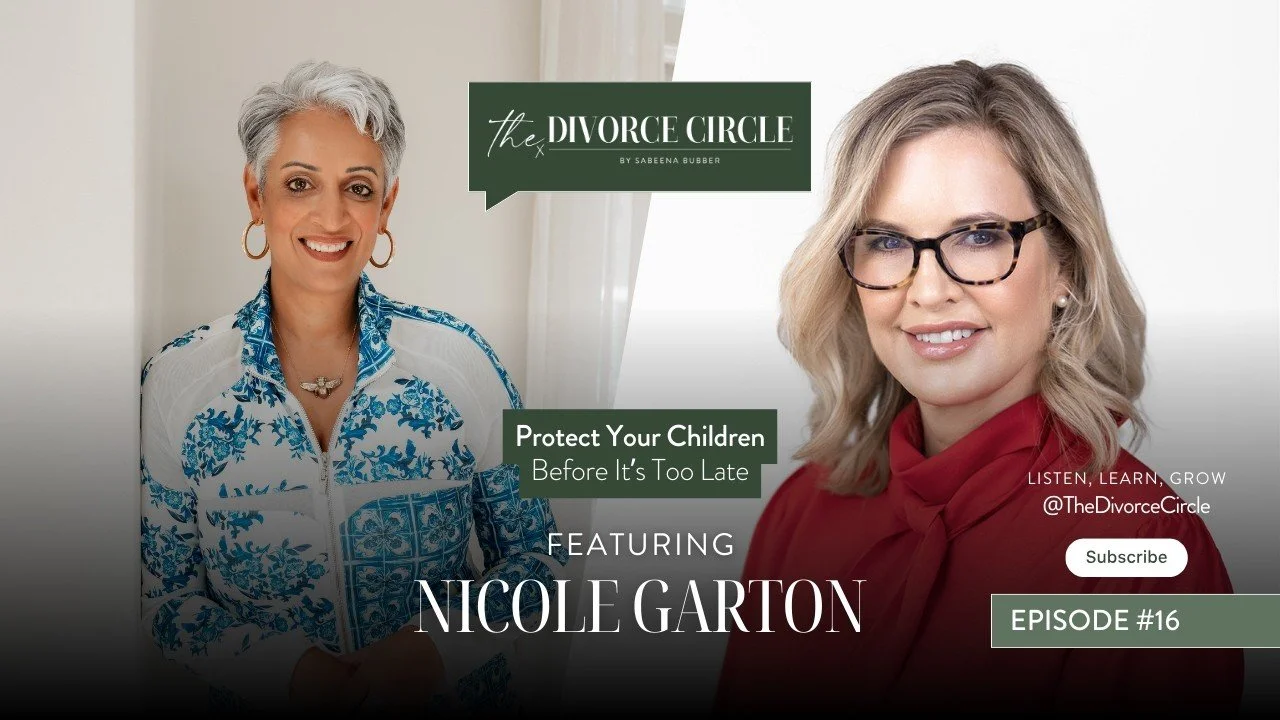
In a crucial episode of The Divorce Circle podcast, host Sabeena Bubber sat down with Nicole Garton, founder of Heritage Trust Company, to unpack the critical estate planning steps every person should take after a separation or divorce. This article summarizes their conversation, highlighting the mistakes that can destroy your legacy and how to avoid them.
The Critical Mistake: Forgetting to Update Your Will & Beneficiaries
When a marriage ends, your will, beneficiary designations, trusts, and powers of attorney don’t automatically update. This means your ex-spouse could still be legally entitled to your assets, regardless of what your divorce agreement says.
““The number one horror story is when someone dies with two legal spouses because they never finalized their first divorce,” Nicole warns. “You have to clean up your stuff. Finalize the divorce, get a separation agreement, and update your will.””
Common Estate Planning Mistakes After Divorce
Not Updating Your Will
Your ex-spouse may still be your primary beneficiary, inheriting assets you intended for your children or new partner.
Draft a new will immediately after separation that reflects your current wishes and relationship status.
Ignoring Beneficiary Designations
Life insurance policies, RRSPs, and TFSAs with your ex-spouse named as the beneficiary will go directly to them, bypassing your will and your estate.
Review and update the beneficiary designations on all your financial accounts and insurance policies.
Failing to Plan for Blended Families
Without a clear plan, assets can unintentionally go to a new spouse, disinheriting children from a previous marriage.
Work with an estate planner to create trusts and other structures that protect your children’s inheritance while providing for your new partner.
Delaying Planning for Incapacity
If you become incapacitated without an updated power of attorney, your ex-spouse may still have the legal authority to make financial and medical decisions for you.
Appoint a new, trusted individual to act as your power of attorney for both financial and healthcare decisions.
“Grey Divorce” and Protecting Your Legacy
Divorcing later in life, often called a “grey divorce,” presents unique challenges. You may have accumulated significant assets, and your children are likely adults with their own families. It’s essential to have open and honest conversations with your adult children about your estate plan to prevent misunderstandings and conflict down the road.
Key Takeaways for Protecting Your Assets After Divorce
• Act Immediately: Don’t wait for the divorce to be finalized. Start updating your estate plan as soon as you separate.
• Review Everything: Go through every financial account, insurance policy, and legal document to ensure your ex-spouse is no longer listed as a beneficiary or decision-maker.
• Work with a Professional: An experienced estate planner can help you navigate the complexities of post-divorce planning and ensure your assets are protected.
• Communicate Clearly: Have open conversations with your loved ones about your wishes to prevent future disputes.
Your divorce settlement is only one piece of the puzzle. Proactive and thorough estate planning is the only way to ensure your assets are distributed according to your wishes and that your legacy is protected.
To hear the full, insightful conversation with Nicole Garton, listen to the podcast episode here. For more resources on navigating your finances after divorce, visit The Divorce Circle and Sabeena Bubber’s website. To learn more about estate planning, connect with Nicole Garton at Heritage Trust Company.