
Episode #10: Navigating Divorce & Family Dynamics: A Holiday Survival Guide
The holiday season, a time often associated with joy and togetherness, can feel like a minefield when you’re navigating a divorce or separation. The pressure to create a “perfect” holiday for your children, coupled with your own feelings of sadness and loss, can be overwhelming. But you are not alone, and there is a path through the complexities of family dynamics during this challenging time.
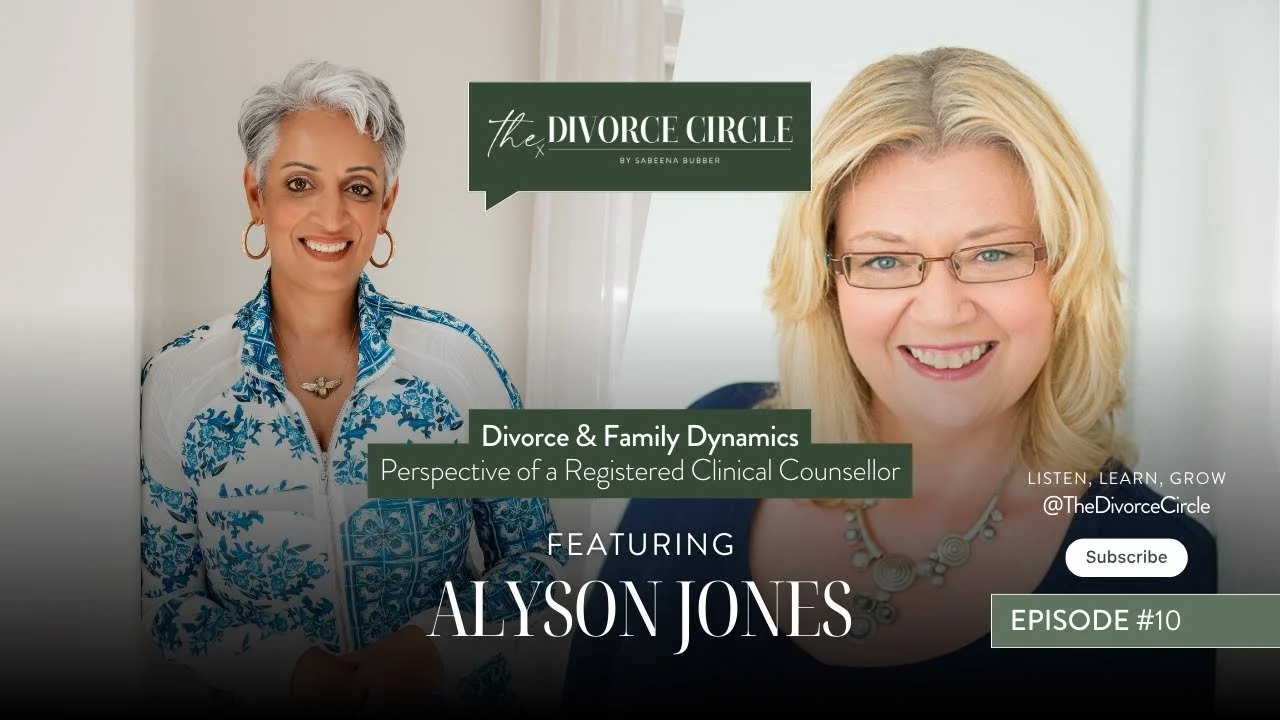
In a special holiday episode, The Divorce Circle podcast revisits a powerful conversation with renowned Registered Clinical Counsellor, Alyson Jones of Alyson Jones & Associates. This article captures the timeless wisdom from their discussion, offering a beacon of hope and practical guidance for families in transition.
The Big Conversation: When and How to Tell the Children
One of the most agonizing decisions for divorcing parents is when and how to tell their children about the separation. There is no one-size-fits-all answer, but Alyson Jones provides a framework for approaching this delicate conversation with compassion and care.
“Remember, this is just a chapter in your journey, not your entire story.” This gentle reminder from the podcast sets the tone for a conversation focused on resilience and hope.”
Present a United Front
Whenever possible, both parents should be present for the conversation. This shows your children that you are still a parenting team, even if you are no longer a couple.
The “Why” Behind It
A united front provides a sense of security and stability for children during a time of immense upheaval
Keep it Simple and Age-Appropriate
Use clear, simple language that your children can understand. Avoid blaming or sharing adult details that are not relevant to them.
The “Why” Behind It
Children do not need to be burdened with the complexities of adult relationships. They need to feel safe and loved.
Reassure and Validate
The most important message you can give your children is that you both love them and that the divorce is not their fault. Validate their feelings, whether they are sad, angry, or confused.
The “Why” Behind It
Children often internalize blame. Explicitly telling them they are not at fault is crucial for their emotional well-being.
It’s Okay to Not Have All the Answers
You may not have all the answers to your children’s questions, and that’s okay. Be honest with them and let them know that you will figure it out together.
The “Why” Behind It
This models honesty and vulnerability, and it reinforces the message that you are still a family, even if it looks different.
What Hurts Children the Most in a Divorce?
It’s not the divorce itself that causes the most harm to children, but rather the level of conflict between their parents. Alyson Jones is clear on this point: ongoing conflict is the single most damaging factor for children of divorce. Shielding your children from conflict is one of the greatest gifts you can give them.
The Unspoken Benefits of Shared Custody
While the transition to shared custody can be difficult, it also offers unexpected benefits. It can lead to more one-on-one time with each parent, fostering deeper connections. It also forces parents to be more intentional and present when they are with their children.
A Word of Caution: The Perils of
Well-Meaning Bad Advice
Friends and family mean well, but their advice can sometimes do more harm than good. They are not objective, and their perspective is colored by their love for you. While their support is invaluable, it’s crucial to rely on the guidance of trained professionals—therapists, lawyers, and financial advisors—for the big decisions.
The Long-Term Echo of Negative Behaviour
It’s easy to get caught up in the heat of the moment and engage in negative behaviors like bad-mouthing your ex-spouse. But these actions have a long-term echo. They not only harm your children but also damage your own integrity and peace of mind. Choosing the high road is not always easy, but it is always worth it.
Key Takeaways for a Peaceful Holiday Season
Communicate with intention: When talking to your children about the divorce, be united, simple, and reassuring.
Minimize conflict: Protect your children from parental conflict at all costs.
Seek professional guidance: Rely on the experts for advice on the legal, financial, and emotional aspects of your divorce.
Choose the high road: Your actions today will shape your children’s future and your own peace of mind.
This holiday season, give yourself the gift of grace. Acknowledge the challenges, but also embrace the opportunity for growth and renewal. Remember, this is just one chapter in your story, and brighter days are ahead.
To hear the full, insightful conversation with Alyson Jones, listen to the podcast episode here. For more resources on navigating divorce and family dynamics, visit The Divorce Circle and Alyson Jones & Associates.